Foundation Settlement
Foundation Settlement
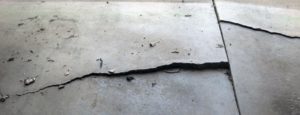
[caption id="attachment_1183" align="alignleft" width="300"]
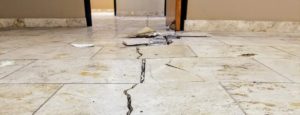
Foundation Settlement Floor Heave Cracks[/caption]
If your home is experiencing uneven vertical movement, it may be time to contact a foundation repair professional. Using a variety of tools, these professionals can stop the settling process and keep your home in good condition. There are several possible causes of foundation settlement, including Gravity, Climate, and Seismic activity. Contacting a professional is your best bet when your home is experiencing foundation settlement problems. Listed below are some common foundation solutions for foundation problems.
Uneven vertical movement
Uneven vertical movement in foundation settlement is an important problem that requires immediate attention. If left untreated, this problem can lead to the collapse of the entire structure. This article will discuss the types of foundation settlement, its causes, and possible remedies. The foundation is the lowest part of a civil structure that transfers loads safely to the ground. The stability of the foundation plays a crucial role in the overall performance of a structure.
When the soil beneath a foundation has different lithological characteristics, it can cause uneven vertical movement. Fortunately, it is not impossible to correct the problem. If you suspect that your foundation is experiencing an uneven settlement problem, call a structural engineer as soon as possible. An engineer can determine the root cause of the problem and recommend the proper solution. During the initial design of your foundation, you should also consider the soil beneath it. Ideally, the soil should be free of silt and clay.
Gravity
In the case of foundation settlement, the amount of soil compressing is a key consideration. As a result, the subgrade settles down along its gravitational direction. Different upper structure loads also contribute to differential settlement. Under varying loads, pore water gradually leaks from the soil, which causes consolidation and eventual settling. In this article, we will examine two different types of settlement: final settlement and secondary consolidation settlement.
In the case of a building’s foundation, the soil underneath is naturally compressed by the weight of the building. This forces water to drain from the soil and makes it dense. The weight of the building affects the quality of the soil beneath the foundation, and the owners cannot change this. However, if there are any changes in the integrity of the soil beneath the foundation, it may indicate foundation settlement. In addition to causing structural problems, foundation settlement can also be a cause of rising dampness.
Climate
The climate of foundation settlement affects homes in a variety of ways. While the weight of the structure and its superstructure are the primary causes, a foundation’s design also plays a part. A foundation that is poorly reinforced will tend to settle more than a foundation that has proper reinforcement. Climate-related factors such as earthquakes and traffic loads can also cause foundation settlement. Listed below are some of the main signs of foundation settlement.
Uniform Foundation Settlement – If a foundation settles evenly throughout its entire base, there is little risk of structural damage. However, if the soil is not uniform, differential foundation settlement can occur. This type of settlement affects the utilities of a structure and can lead to distortions in structural components. In extreme cases, differential settlement can result in a ruined structure. Therefore, it is crucial to understand the climate of foundation settlement in your area before deciding on the type of foundation you should use.
Chandler AZ | Gilbert AZ | Glendale AZ | Mesa AZ | Phoenix AZ | Scottsdale AZ | Tempe AZ
Tempe Arizona – Scottsdale Arizona – Phoenix Arizona – Mesa Arizona – Gilbert Arizona – Chandler Arizona – Ahwatukee Arizona
YouTube Video Playlist:
Foundation Cracks – J-Bolt Anchor Replacement – Foundation Warning Signs – Ahwatukee Foundation Repair – Tempe Foundation Repair – Stem Wall Repair Tempe AZ – Stem Wall Repair Ahwatukee AZ – Concrete Repair – Glendale Foundation Repair – Mesa Foundation Repair – Crack Stitching – Oxidized Rebar – Concrete Crack Repair – Expansive Clay Soil – Foundation Settlement – Stem Wall Repair
Seismic activity
When earthquakes strike, structural damage can vary considerably depending on the type of soil that is nearby. Different types of soil will conduct seismic waves differently, so careful monitoring is essential to avoid structural damage. Several conditions need to be met for soil liquefaction to occur, including the degree of compactness of the soil, particle size, and water saturation. The amount of displacement induced by an earthquake will be proportional to these factors.
In the region of Ilgin, in the central-southwest of Turkey, newly formed granular deposits pose a substantial risk of foundation settlements and surface liquefaction. This study evaluated the amount of potential settlement due to seismic effects in 45 geotechnical bores. Residential areas in the area were selected for investigation, and 45 Standard Penetration Tests were performed to estimate the amount of settlement that could occur under a Local Magnitude 6 earthquake. The study also included calculations of liquefaction susceptibility in areas with medium-high and low resistance.
Trees
If you’ve got a large tree growing near your foundation, you may be at risk of having foundation settlement problems. Tree roots can pull moisture from the soil, causing the foundation to shrink and move. Eventually, the concrete foundation can collapse due to voids. In some cases, trees are responsible for the problem, but there are also other causes. Poor insulation in the basement and improperly insulated trees can cause the soil around your foundation to deteriorate.
To prevent foundation settlement from affecting your house, you must first identify the tree type that grows in the area. Some are more likely to cause foundation problems than others. Some are fast-growing, and their roots extend far. These types of trees should be avoided, and you must consider your neighbors’ landscape before choosing a tree for your foundation. If you are unsure of the type of tree that will grow in your yard, consult the National Wildlife Federation’s Field Guide to Trees to avoid damaging your foundation.
Time
Your home may be settling. The soil that your foundation rests on is subject to shifting, which leads to uneven settlement. The top soil layers are especially susceptible to shift, and this movement leads to air pockets beneath the foundation. This causes the home to sink, filling in crevices, and throw the entire structure off balance. This causes you to ask yourself, “Is it time for foundation settlement?”
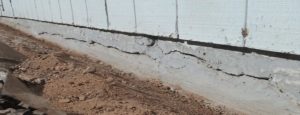
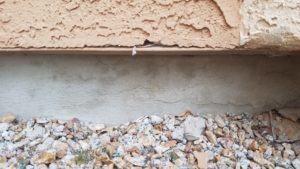
Cracks in your drywall are a surefire sign of foundation settlement. They are generally bigger on upper floors and more noticeable at corners and seams. Drywall tape may come loose, which may be another sign of foundation settlement. Also look for stair-step cracks in foundation walls. Soil erosion can also be a cause of foundation settlement. While the soil below your foundation may be stable, foundation settlement can result in serious damage to the walls and floors of your home.