How much does Foundation Repair Cost? While this is a common question, the general answer depends on a number of factors. The number of sections of the home needs to be supported may increase the cost. Most contractors base their charges on the number of piers under the foundation, with an average job requiring fifteen to twenty supports. Here are some tips for determining the cost of foundation repairTempe AZ. Listed below are some of the most common causes of foundation problems, and how to determine if your home needs repairs.
Fix Foundation Cracks
While foundation cracks are often caused by house settlement or concrete shrinkage, they do not present immediate structural problems. Instead, they serve as an excellent entrance for moisture and pests, which can contaminate food and spread disease. This article will discuss a few ways to repair foundation cracks and prevent further damage to your home in Tempe Arizona. We hope this article is helpful and will answer any questions you may have. And don’t hesitate to contact us for a free consultation or estimate. More about foundation repair.
The first step in repairing foundation cracks is identifying the cause of the problem. Sometimes foundation cracks develop slowly over time. Some are simply hairline cracks, a normal sign of settling concrete. Other cracks are more serious and should be investigated. Moreover, if a crack appears where there is a large amount of concrete and a lot of pressure is exerted on the foundation, it may indicate a serious structural problem. More about foundation repair.
When choosing stem wall repair experts, look for their experience. An expert who has been in the business for a long time will know how to repair stem walls in the most efficient way. Also, an expert with a long history of service is more likely to remain in business, so they have honed their skills over the years. Read reviews of stem wall repair experts and look for recommendations from building inspectors. A good stem wall repair expert should offer a warranty and a guarantee of their work. More about stem wall repairPhoenix Arizona.
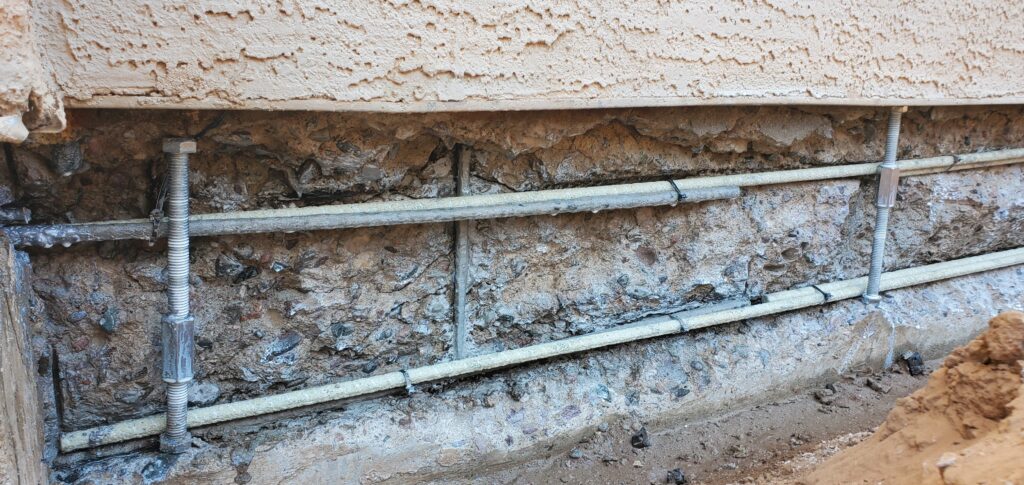
Cracks in stem walls may appear in different locations. While they may be small, they usually come from oxidizing rebar. These cracks will spread and eventually spall. Most stem wall repair systems will rust and oxidize, losing their benefits over time.
Fix Rusting Rebar Steel
If you notice cracks in the concrete, you probably have to repair rusting rebar steel in your basement. This is caused by water ingress. In addition to rust, water can also damage electrical wires. In many cases, the basement is 400 years old and was constructed with local stone and lime mortar. During the 1920s, a remodel was performed that didn’t touch the cellar walls, and rebar has been exposed and oxidized.
A rusty rebar is hardly going to reduce the bond strength of the concrete, and the corrosion will hardly decrease the strength of the steel reinforcement. The adhesiveness of the surface and the nodes in the rusting rebar will determine how well the steel bonds. Depending on the extent of the rusting, a small sledgehammer or chisel may be enough to break the concrete in the affected area. You may also need a pry bar, or a crowbar, for smaller spaces. Once the rebar is broken, epoxy or grout will be applied to fill any cracks.
The best way to avoid rust is to clean rebar before you place concrete over it. A rusty rebar can cause the cement to break down, resulting in a weak bond between the concrete and the reinforcement. If the rust isn’t present, you can try applying corrosion inhibiting admixtures, coating the rebar, and sealing the concrete surface. Make sure to reapply any of these methods regularly.
GFRP Rebar
Certified Foundation Repair.
Glass Fiber Reinforced Polymer (GFRP) rebar is an innovative material for strengthening concrete. It combines longitudinal glass fibers with 1% MEKP (methylene chloride), an unsaturated polyester resin. These fibers are about half as light as steel rebars, and their tensile strength is approximately two times that of steel. Unlike steel, GFRP rebars can be handled more easily and are less expensive to use. More about foundation repair.
In addition to being corrosion-resistant, GFRP rebar is lighter than steel. It is easy to machine and cuts easily with common tools like concrete saws and boring machines. It is also easier to transport, which makes it less expensive. It’s not just better for the environment: it reduces the transportation cost. As a result, GFRP rebar is the way to go when your foundation needs repair.
GFRP rebar has several advantages that make it the preferred choice for many projects. Its low cost, low maintenance, and excellent durability make it the ideal choice for many projects. Unlike steel, GFRP rebar is not affected by deicing salts, which can be corrosive to metals. Further, it can be shaped or bent in the field. Its high strength and low weight make it the ideal material for foundation repair projects.
Steel Rebar Replacement
If you notice that your home has horizontal cracks, the rusting rebar is the most likely cause. Insufficient concrete cover, water softener leaks, and salt in the air all contribute to the problem. Often, vertical cracks are ignored, allowing the atmosphere to reach the rusting rebar. Avalon specializes in horizontal crack repair and designs, with the help of independent engineers, to make the repairs permanent.
Many problems occur because of poor rebar placement or improper placement. This causes rebar to rust and is a potential source of foundation repair. When the rebar is not properly positioned, it can shift during the pour, compromising its strength. If the rebar is placed too close to the edge of the concrete, it will rust, weaken the structure even more. Poor construction practices keep foundation repair specialists busy.
In recent years, Helix Micro Rebar has emerged as an advanced steel product. Using Helix Micro Rebar instead of standard rebar saves time, money, and sanity. This innovative rebar is one-inch-thick twisted reinforcement that is mixed into the concrete before it’s poured. This rebar prevents cracks from forming and reduces the amount of concrete used.
Foundation Wall Repairs
Before carbon fiber, foundation wall repairs were performed using hydrophobic foam. This material expanded when water was in contact with it, and tended to be a temporary fix. Although the materials improved structural integrity, they also allowed cracks to move around and lead to leaks. To solve this issue, engineers developed a new technology called Reinforcer. This carbon fiber material is four inches wide, thin as a dime, and eight to ten times stronger than steel.
When this type of repair is necessary, professionals must diagnose and assess the underlying problems and develop a scope of work for the repair. Once the scope of work is completed, a field report must be developed to detail the observed issues and repair recommendations. Then, the construction can begin. Here are some tips for foundation wall repairs. If you think you may need a repair, contact a professional today! There are many benefits to repairing the foundation walls of your home.
Foundation Experts
The first sign of a problem with a home’s foundation is cracking in the foundation. Cracks can form in any area of the foundation and can range from minute to major. Without a professional inspection, a small crack can lead to bigger problems and higher repair costs. The experts at Jackson & Company are well-trained to identify cracks and determine the root cause. If you suspect that your foundation may be in need of repair, call them today for a free inspection and estimate.
Cracks and moisture can also be signs that your foundation needs repairs. Foundation experts check for signs of moisture near your home and around your foundation. This moisture may come from nearby running water or from the home itself. Even a small crack in the pipes can cause moisture to collect near the foundation and begin eroding the ground. If the water comes from inside the house, foundation repair should be relatively simple. If the leak is outside, a more extensive repair may be needed.
Replace Rusting Corroded J-Bots with New Anchor
To replace rusting and corrosion-prone J-Bots with new anchors, you will need to first determine the tension force applied to the outermost bolt. You will then need to remove twelve-inch-diameter cores of No. 11 rebar. After removing the insulation, add a layer of epoxy grout to the anchor. Next, install a split closed-cell polyurethane sleeve to isolate the upper stud from the lower one.
RSS Error: Retrieved unsupported status code "404"
RSS Error: Retrieved unsupported status code "500"
We are very pleased with James and his guys. We had three companies come out to look at our foundation problem. James explained exactly what was happening and how to fix it. He was the only person who wanted to actually stop the problem from getting worse and fix it properly. The others companies wanted to do a band aid. This was a case of, you get what you pay for. We wanted it done right and not have to revisit the problem in a couple years and waste money. The guys who did the job were awesome. Hard working and we’re done a day early. Polite and informative. Thanks for giving us confidence.
James saved me close to $8k, identified the root cause of the problem, and we were able to save a large tree.
One of my rental units had buckling of tiles. For the past few months, we’ve had professionals come out and even an insurance agent. Each foundation expert gave us a different advice and we were left confused. From injecting polyurethane around the house to injection slurry at the affected site. Each recommendation costed between $4-$8k. I met with James, very professional. He took a look at the property and within 5 minutes diagnosed the problem and it wasn’t even foundation related! When he told me if was humidity and vapors causing the buckling of the tiles, I kinda thought…this guy believes in voodoo magic. Well, we broke out one the tiles to look underneath and low and behold, the foundation was flat underneath and that the tiles really did pull up. So the fix? Pull out the tiles, re-grout, and set them back in place with grout that allows for expansion such as siliconized grout. Isn’t that crazy?? I also speculated that a large exterior tree may have been the culprit of the ground moving. We went outside looked around and he basically said the tree is fine and does not need to be removed. I gave James a great big hug for really helping us with this situation.
Thank you, thank you, thank you!
Lesson learned: For something as big as a foundation issue, make sure to get several opinions.
James was outstanding! He spent time educating me on the needed repairs and going over what it was going to take to fix my foundation problem. He is very professional and interested in actually helping his clients. He has videos to support his over 30 years of experience and knows how to do the job right. Thanks for your services!!
I highly recommend James and his crew for any concrete job!!! He and his workers are highly skilled, extremely thorough, knowledgeable and polite. I had a stem wall repair job that I’d been putting off for far too long. I sought other bids but James’ was more detailed (by far), priced competitively and provided by James himself—He gave me a complete rundown of the process and the products he would use as well as the time frame and the warranty he would provide. I accepted his bid on the spot and scheduled the work for the following week. The job was completed in the time frame discussed and the results were far beyond my expectations. The house, courtyard, landscaping, sidewalk, yard and street were left cleaner than they found it. They even polished my stained concrete courtyard which was in no way a part of the job!!!! They went above and beyond and I am so grateful for that. Call James if you want the best team for your job!!!
Mick
James came out to my home and was able to pretty quickly identify my problem. He did a full foundation inspection, inside and outside. He was able to identify and show me where these area are and explain each of them, why they matter and what else could stem from them. He was able to provide me with a step by step plan of what I need to do as well as giving me a referral. His solution was not to fix what was cosmetically wrong but rather identify the problem and fix the problem. Once that has been completed we can move forward with a much lower cost option (not using piers or pillars) that is just as effective. I feel empowered and very knowledgeable about our foundation problems. He didn’t try to sell me anything or offer me a buy now gimmick for a discount (As one well known company in the valley does. You feel so pressured to make a very big decision when this happens) . He let me know at the very end how his services could help and when the time to help would be (after we have identified the problem and fixed it). He was very friendly. Family own and ran company. He’s third generation and 35+ years. He not only has expertise in AZ foundation issues but is from Nebraska and has a very well rounded knowledge of Soil and foundation problems. Thank you so much James for getting us started and saving us a ridiculous amount of money!
Libby
Although I cannot speak to the company Concrete Repairman’s actual work, we found James a walking encyclopedia of information concerning many home issues. Our experience was pleasant and professional.
Sylvia
Great company! We were worried we had a foundation problem so we called for an evaluation. They couldn’t find anything wrong but taught us a ton about signs to watch for and didn’t charge us a dime. If I ever DO have a foundation problem I know exactly who to call. Awesome!
Thia
Had the foundation repair completed in March. Later, I noticed a small low line (depression) close to the foundation. Once I notified the company of this, they quickly responded, not only fixing the problem to perfection, but also did a little grading repair to an area that was outside their responsibility. Later it was brought to my attention that the grading problem may have existed before the foundation work was done. Their workmanship is far beyond expectation. I appreciate their quick response and willingness to do more than was asked.
Tomlin
James, Concrete Repairman LLC surely saved the day for us and our home. It became aware that a large crack had formed due to gutter rain being misdirected toward the home. James was amazing in his precise knowledge of how to fix the floor that had heaved several inches across the living room. It was a massive undertaking to us and James was very reassuring that with his leveling and stitching the floor would be better than new. Well, he is amazing. We were so impressed. The crew worked hard and diligently, there were No schedule changes, every day they were on time, the job was done with the utmost professionalism. Communication before and during project was beyond our expectations. I’ve read other reviews and they are so wrong. This is an amazing company with skilled workers who care about the customer.